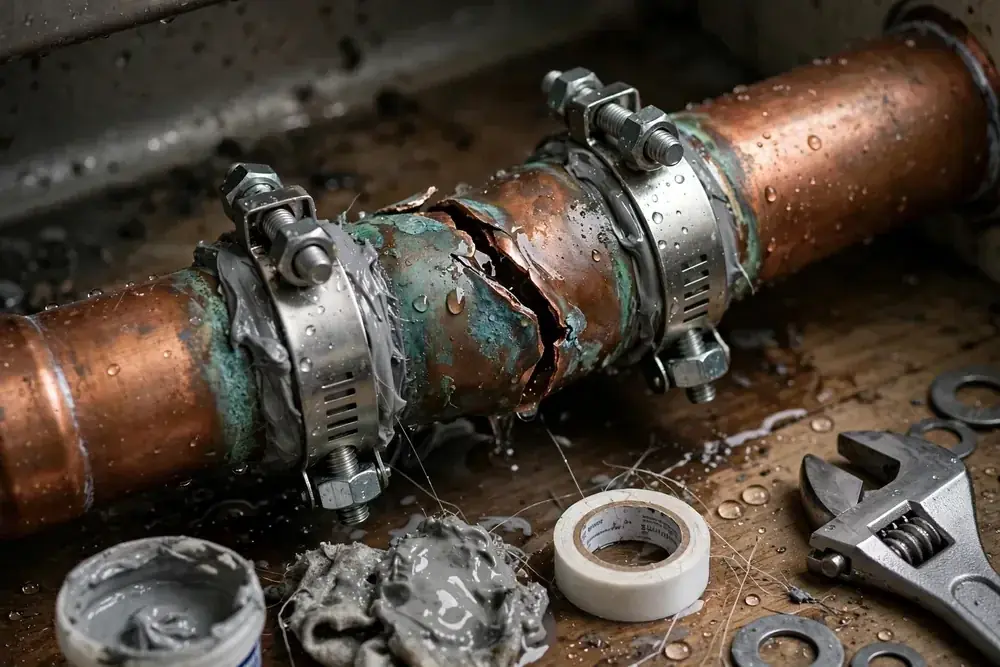
What to do first when a pipe leaks
- Shut off the main water valve, or the nearest shutoff to the leaking pipe.
- Open the lowest faucet to drain pressure from the line.
- Turn off power near wet areas and move belongings away.
- Photograph the damage and call a plumber if water is spreading.
See our burst pipe repair page if water is pouring out.
Temporary fixes and permanent fixes
| Fix | Temporary or permanent | Notes |
|---|---|---|
| Pipe repair clamp | Temporary | Slows a pinhole leak until a plumber arrives |
| Epoxy putty or tape | Temporary | Only for very small leaks at low pressure |
| Cut out and replace a section | Permanent | Uses new pipe and proper fittings |
| Replace a failed fitting | Permanent | Fix the joint and inspect nearby ones |
| Repipe the run | Permanent | When corrosion or repeated leaks make patching pointless |
Temporary fixes are fine as a bridge. They are not a plan.
Pipe materials and how each fails
- Galvanized steel. Corrodes from the inside, narrows and leaks at threads.
- Copper. Lasts a long time but can develop pinhole leaks, especially at joints.
- CPVC. Resistant to corrosion but brittle, and can crack with age or stress.
- PEX. Flexible and resistant to freezing damage, but fittings must be right and sunlight can harm it.
- Polybutylene. Used in some homes from the late 1970s to the 1990s and prone to failure. If you have it, ask about replacement.
Signs a patch will not hold
A single clean leak in sound pipe is a candidate for a quick repair. Multiple leaks, flaking rust, green stains and low pressure at every tap tell a different story. The pipe is failing, and each patch moves the pressure to the next weak spot. In those cases ask about repiping, at least for the affected run.
If you cannot see the leak, leak detection finds it before anyone opens a wall.
Frozen pipes in an Alabama winter
Hard freezes are less common here than in the north, but they happen, and pipes in attics, crawlspaces, exterior walls and outdoor spigots are the first to go. Open the faucet, keep heat on and warm the pipe slowly with a hair dryer. Never use an open flame. If the pipe has split, the leak starts when the ice melts, so know where the main shutoff is.
After a freeze, check hose bibs and exposed pipes for bulges, frost on joints and wet spots inside walls. A small split caught early is a small repair.
What affects the cost of a pipe repair
Pinhole leaks in copper
Pinhole leaks in copper pipe often appear in a cluster. A tiny hole sprays a fine mist, soaks insulation or drywall and goes unnoticed until a stain appears. Causes include water chemistry, high velocity and age. A repair can fix one hole, but if several have appeared, others are likely coming. Ask the plumber to inspect the same run for thin spots and to explain whether replacing it makes sense.
Keep the pipe visible until the repair is done. A small leak is easy to patch, and a wall opened to chase it can be fixed once with a proper access panel.
Documenting a repair for insurance and resale
Photograph the damaged pipe before and after the repair, and keep the plumber's invoice. It should name the pipe material, the section replaced and the date. If you sell the house, a record of past repairs reassures buyers and inspectors, and if a claim is ever needed, it shows the leak was sudden and that you acted on it.
If the plumber noticed other worn sections, ask for that in writing too. It gives you a plan for the next repair instead of a surprise.
Bessemer note: permits and licensed work
Replacing a section of pipe is often treated differently from new work, but ask. Bessemer Building Inspections handles plumbing permits at (205) 424-4060. The Alabama Plumbers and Gas Fitters Examining Board licenses plumbers, and you can ask a contractor for a license number.
Source type: City building inspections and state licensing board
Homes in Fairfield and Hueytown often have older pipe, so ask for an inspection of nearby sections.
Pipe repair questions
A temporary clamp can slow a small leak. A permanent fix needs the right materials and fittings, and a plumber can do it properly.
Repeated leaks, rusty water, flaking pipe and low pressure suggest it. A plumber can show you the condition of what is visible.
It has a known failure record. If you have it, ask a plumber about replacement.
Shut off the water and call. We find the leak with meters and thermal tools before cutting.
Policies differ. Many cover sudden water damage but not the pipe repair. Ask your agent.