Water heater leaking or no hot water? Do this first
Most water heater emergencies get worse for a few minutes and then stop getting worse once the supply is closed. These steps take about two minutes and protect your floor.
- Close the cold water shutoff valve on the pipe entering the top of the heater. A quarter turn handle should sit across the pipe when closed.
- Switch an electric unit off at the breaker. On a gas unit, turn the gas control knob to off. Do not relight anything near standing water.
- Open a hot tap upstairs so the lines can drain and the pressure drops.
- Move rugs, boxes and stored items away from the tank and mop what you can reach. A wet-dry vacuum works well on a garage slab.
- Call the 24/7 line. If you smell gas, leave the house first and call your gas utility or 911 from outside.
Water pouring from the relief valve discharge pipe is a different problem from a leaking tank seam. Tell the dispatcher which one you see, because it changes the parts we bring.
Why a water heater in Bessemer stops heating
Callers describe the same handful of situations. No hot water at all, lukewarm water that runs out fast, water that smells like sulfur, and a puddle at the base are the four we hear most. The cause is usually one failed part rather than a dead tank.
| What you notice | Common cause | How it is usually handled |
|---|---|---|
| No hot water, electric unit | Failed heating element or tripped thermal cutoff | Test and replace the element or reset the cutoff after checking the thermostat |
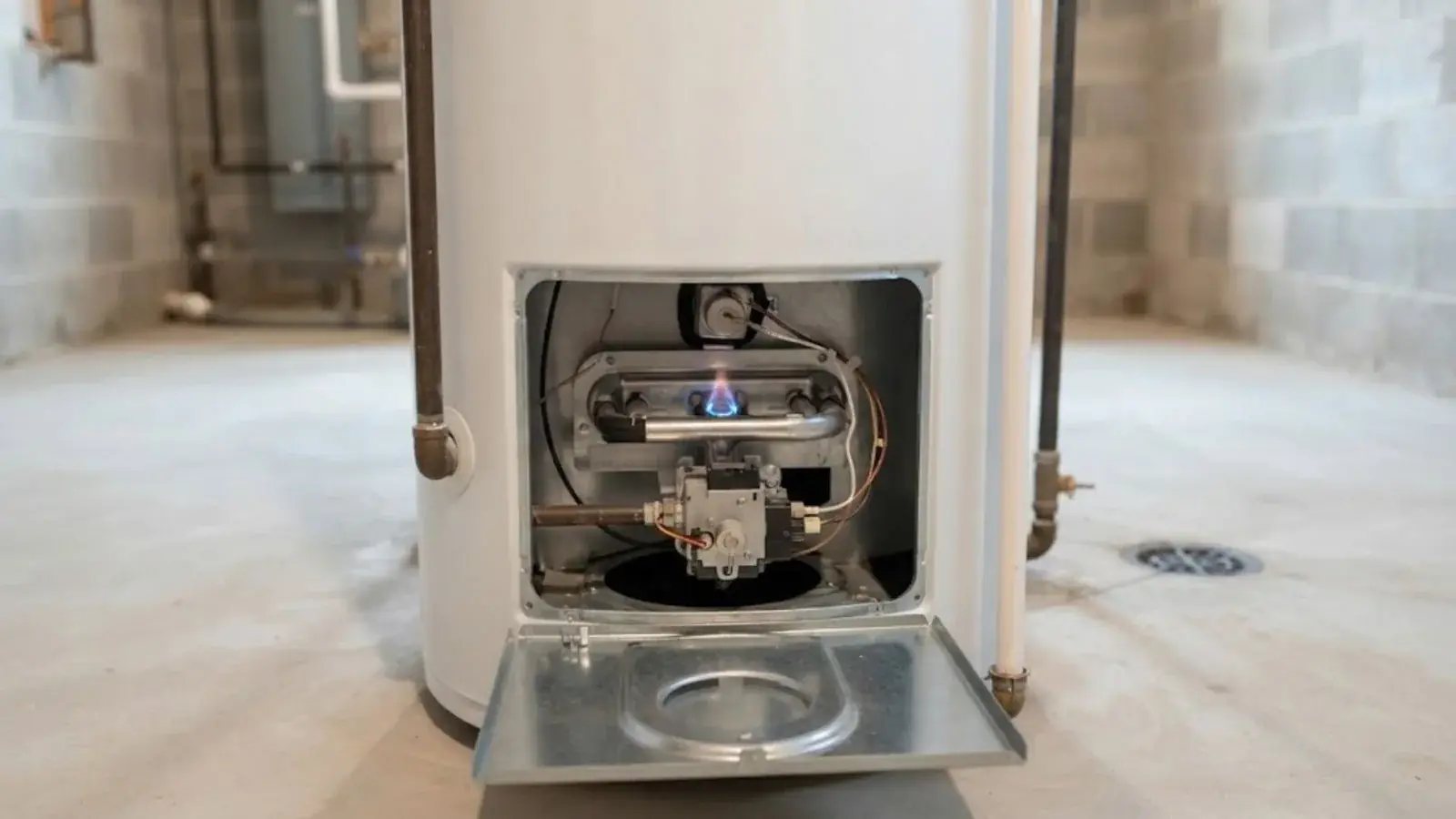
| No hot water, gas unit | Pilot out, bad thermocouple or failed igniter | Replace the sensing part, clean the burner and test draft and combustion |
| Hot water runs out quickly | Broken dip tube or sediment over the lower element | Replace the dip tube or flush the tank if the shell is sound |
| Popping or rumbling noise | Hard sediment baked onto the bottom of the tank | Flush the tank, and consider replacement if the noise returns |
| Water at the base of the tank | Leaking fitting, relief valve or a failed tank shell | Tighten or replace the fitting, or quote a replacement if the shell is leaking |
| Rusty hot water only | Anode rod used up and the tank steel corroding | Replace the anode rod early, or plan a replacement if rust is advanced |
A leaking fitting or valve is a repair. A tank shell that weeps water is not. Once the steel liner has rusted through, no part will fix it, and the honest answer is a new heater. Our plumber will show you where the water is coming from before any quote.
Repair or replace: a fair way to decide
The U.S. Department of Energy puts the typical life of a storage tank heater at about 10 to 15 years. Age is the first question we ask on a call, because a heater past 12 years with a leak is a replacement almost every time.
- Repair makes sense when the tank is under about 10 years old, the leak is at a fitting or valve, and the failed part is an element, thermostat, thermocouple or igniter.
- Replacement makes sense when the tank shell is leaking, rust is coming out of the hot taps, or the unit needs a second major part within a year.
- Ask for both prices when the heater is 8 to 12 years old and the repair is more than a minor part, so you can compare.
If the numbers point to replacement, our water heater replacement page explains tank sizing, venting and what is included on the day.
Gas, electric and hybrid heaters: what changes in the repair
Gas heaters add combustion air, venting and a gas valve to the list, so a service visit includes checking the flue for backdraft and the burner for clean flame color. Electric heaters are simpler. A meter test on each element and the thermostat usually finds the fault in minutes.
Hybrid heat pump models add a compressor, fan and condensate drain. A common call is a hybrid unit that has quietly switched to its resistance elements and is running up the power bill. We check the mode, the air filter and the condensate line first.
Tankless heaters have their own failure list, including scale on the heat exchanger and error codes from the flow sensor. Those are covered on the tankless water heater page.
Permits and licensing for water heater work in Bessemer
Bessemer Building Inspections sits on the first floor of City Hall at 1700 Third Avenue North and takes permit questions at (205) 424-4060. Its page states that contractors must hold a current City of Bessemer business license before a permit is issued.
Permit rules vary by the type of work, so ask Building Inspections whether a like-for-like swap needs one. If you do any work yourself under a homeowner permit, the same page says plumbing and gas work must be done by a licensed contractor. You can check any plumber on the Alabama Plumbers and Gas Fitters Examining Board website, which lists a public licensee search.
What changes the price of a water heater repair
Water Heater Repair questions in Bessemer
Yes. The 24/7 line is answered at night, on weekends and on holidays, and we send the next available plumber to Bessemer addresses. While you wait, close the cold water valve at the heater and switch off power or gas.
The usual causes are sediment over the lower element, a broken dip tube that sends cold water straight to the outlet, or a failed upper element. A short flush and a part test normally separates them.
No. A leak at the relief valve, a drain valve or a pipe fitting is a repair. A leak from the tank body is a replacement because the steel liner has failed.
Most element, thermostat and thermocouple repairs finish in one visit when the part is on the truck. Gas control valves and special parts can need a second trip.
We service the plumbing and electrical side and check modes, filters and condensate drains. Sealed refrigerant work can need the manufacturer, and we will say so before you pay for a visit.
Say gas or electric, how old the heater is, where the water is showing, and whether the shutoff valve is closed. That lets us send the right parts.