Suspect a leak right now: what to do first
- Find the main shutoff valve and turn it off if water is visibly spreading or a ceiling is sagging.
- Switch off power to any wet area before you step into it, especially if water is near outlets or a panel.
- If the ceiling bulges with water, poke a small hole in the lowest point and catch the water in a bucket. This relieves weight and prevents a larger collapse.
- Move furniture and electronics away from the wet area and photograph the damage for your insurer.
- Call the 24/7 line and tell us where the water appears and whether the meter keeps moving.
High water bill or a meter that will not stop
A bill that jumps with no change in habits is the most common sign of a leak you cannot see. You can test it yourself in a few minutes.
- Turn off every fixture and appliance that uses water, including the ice maker and irrigation.
- Find your water meter, usually in a ground box near the street, and read the small leak indicator or the sweep hand.
- If the indicator spins or the dial moves with everything off, water is leaking somewhere between the meter and the fixtures.
- Shut the main valve at the house and check again. If the meter stops, the leak is inside the house. If it keeps moving, the leak is in the line between the meter and the house.
That last test tells us where to start, and the answer changes the tool we bring. Our water service line repair page covers leaks outside the house.
Leak inside a ceiling or wall
Brown rings, bubbling paint, a musty smell or warm spots on a wall point to a supply or drain line inside the framing. A moisture meter and a thermal camera show where the water is without opening more drywall than needed.
- Stains below a bathroom. Often a tub drain, shower pan or supply joint. We test each before cutting.
- A wet wall near a water heater or washer. A supply hose, valve or connector may be failing and is usually quick to fix.
- Dripping from a ceiling light. Turn off the breaker and call. Water and wiring do not mix.
Crawlspace, slab and buried line leaks
Crawlspace leaks show up as sagging insulation, damp soil under a bathroom or a musty smell inside. A plumber can often inspect the pipes directly. A leak under a concrete slab is harder to find.
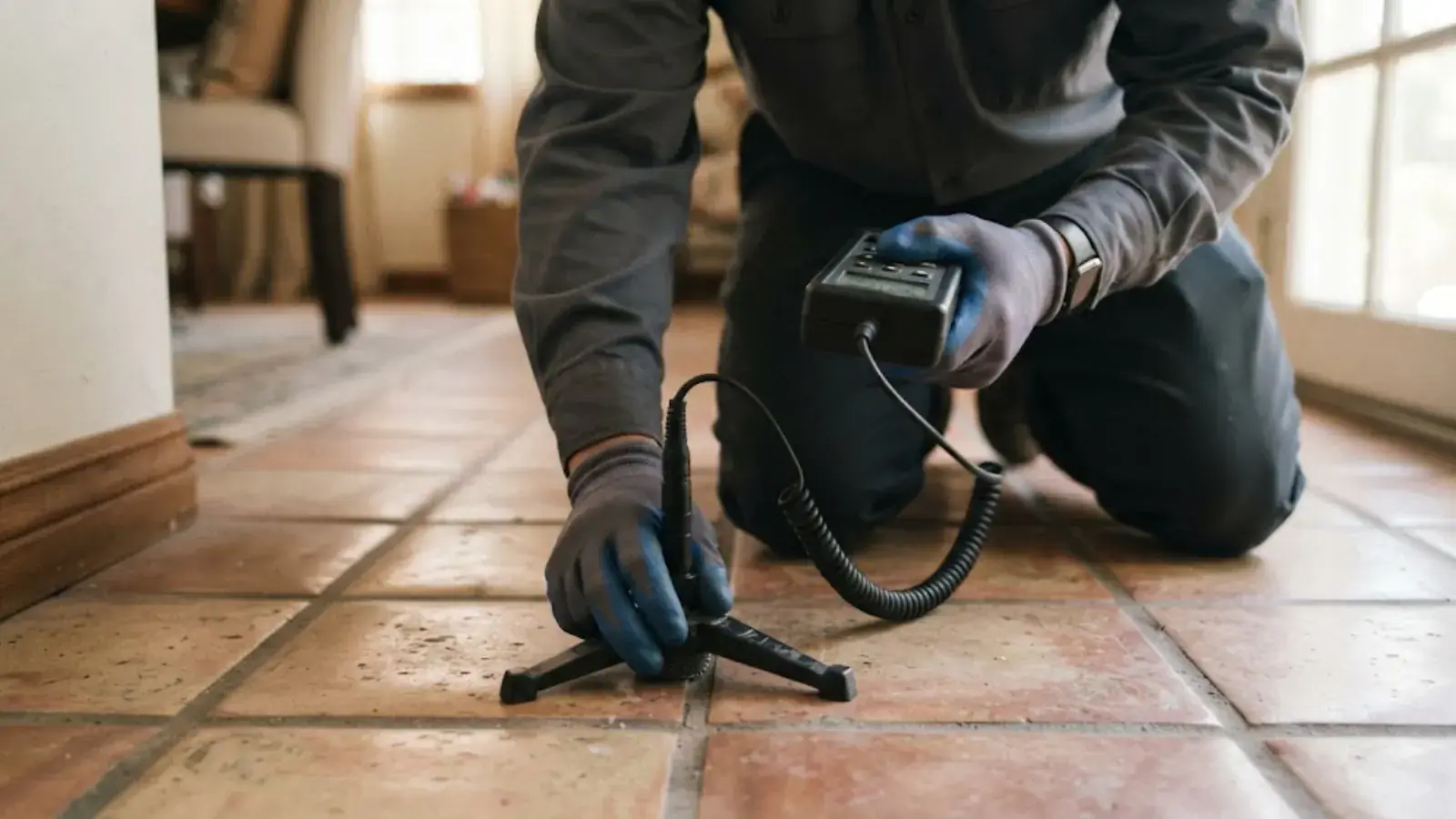
Warm patches on the floor, the sound of running water and a spinning meter point to it, and acoustic listening gear and a pipe locator narrow it down to a small spot. See our slab leak repair page for what happens next.
Outside the house, a wet patch in the yard, a soft spot in a drive or unusually green grass along a straight line can signal a break in the service line. Listening gear, pressure tests and tracing tools help us find it before we excavate.
Irrigation and pool leaks
Sprinkler systems leak at broken heads, cracked risers and failed valves, and the loss is easy to miss because the water runs under mulch. A pressure test on each zone and a walk of the heads usually finds it. Pool and spa plumbing leaks are different, because the loss is slow and the lines are buried. We pressure test the supply and return lines and can isolate the leaking section.
If an irrigation system is tied to the house supply, a backflow device may also need checking. Ask when you call.
How we find a leak without tearing things apart
| Tool | What it does |
|---|---|
| Water meter test | Shows whether water is moving with everything off |
| Moisture meter | Finds wet material in walls, floors and ceilings |
| Thermal camera | Shows temperature differences from hot water leaks or damp areas |
| Acoustic listening gear | Hears the sound of water escaping from pressurized pipe |
| Pressure test | Isolates a leaking section of supply line |
| Pipe locator | Traces the route of buried lines |
No single tool finds every leak, so we combine them and confirm before anything is cut open.
What changes the price of leak detection
Leak Detection questions in Bessemer
Yes. Active leaks, sagging ceilings and meter runaway are dispatched day and night, including weekends and holidays. Turn off the main valve and call.
A rising water bill, a meter that moves with everything off, damp or warm floors, stained ceilings and the sound of running water are the usual signs.
Often yes. A moisture meter, a thermal camera and listening equipment narrow the leak to a small area before any cutting.
It is when water is spreading, near electrical equipment or sagging a ceiling. Shut off the main and call.
Many policies cover sudden water damage but not the repair of the pipe. Check your policy and photograph the damage.
Even a slow leak can soften drywall and feed mold within days, so do not wait for a stain to grow.