Sewer backup: what to do first
- Stop using water. That includes toilets, showers, the dishwasher and the washing machine.
- Do not use the drain again to test it. Each test adds water to a pipe that has nowhere to send it.
- Keep people and pets out of any room where sewage has surfaced.
- Photograph the damage if you plan to make an insurance claim.
- Call the 24/7 line. Mention the lowest fixtures first, because a backup shows there before anywhere else.
Cleanup of sewage-contaminated materials is best left to professionals. A wet-dry vacuum is not suitable for sewage.
How we find the break
A video inspection is the only reliable way to see inside a buried pipe. A waterproof camera on a flexible rod travels through the cleanout while a locator at the surface marks the depth and position of any defect.
| What the camera shows | What it usually means | Typical repair path |
|---|---|---|
| Single crack or offset joint | Settling, a past freeze or a heavy load above the pipe | Spot repair or short lining sleeve |
| Roots entering at joints | Joints have opened and roots find the moisture | Cut roots, then repair or line the joint |
| Bellied or low section holding water | Pipe has sunk and no longer drains fully | Replace the sunk section |
| Collapsed or crushed pipe | Pipe has failed along its length | Dig and replace, or pipe bursting where suitable |
| Heavy scale in cast iron | Age and mineral buildup | Jet clean, then monitor or replace |
A localized crack with some root intrusion is often a candidate for a spot repair. We confirm on video before recommending anything bigger.
Spot repair, lining or replacement
- Spot repair. A short section is cut out and replaced, or a sleeve is installed over the defect. It fits one problem in an otherwise healthy line.
- Lining. A resin-saturated liner is pulled through the pipe and cured in place. It avoids a long trench but needs a pipe that is still round enough to receive it.
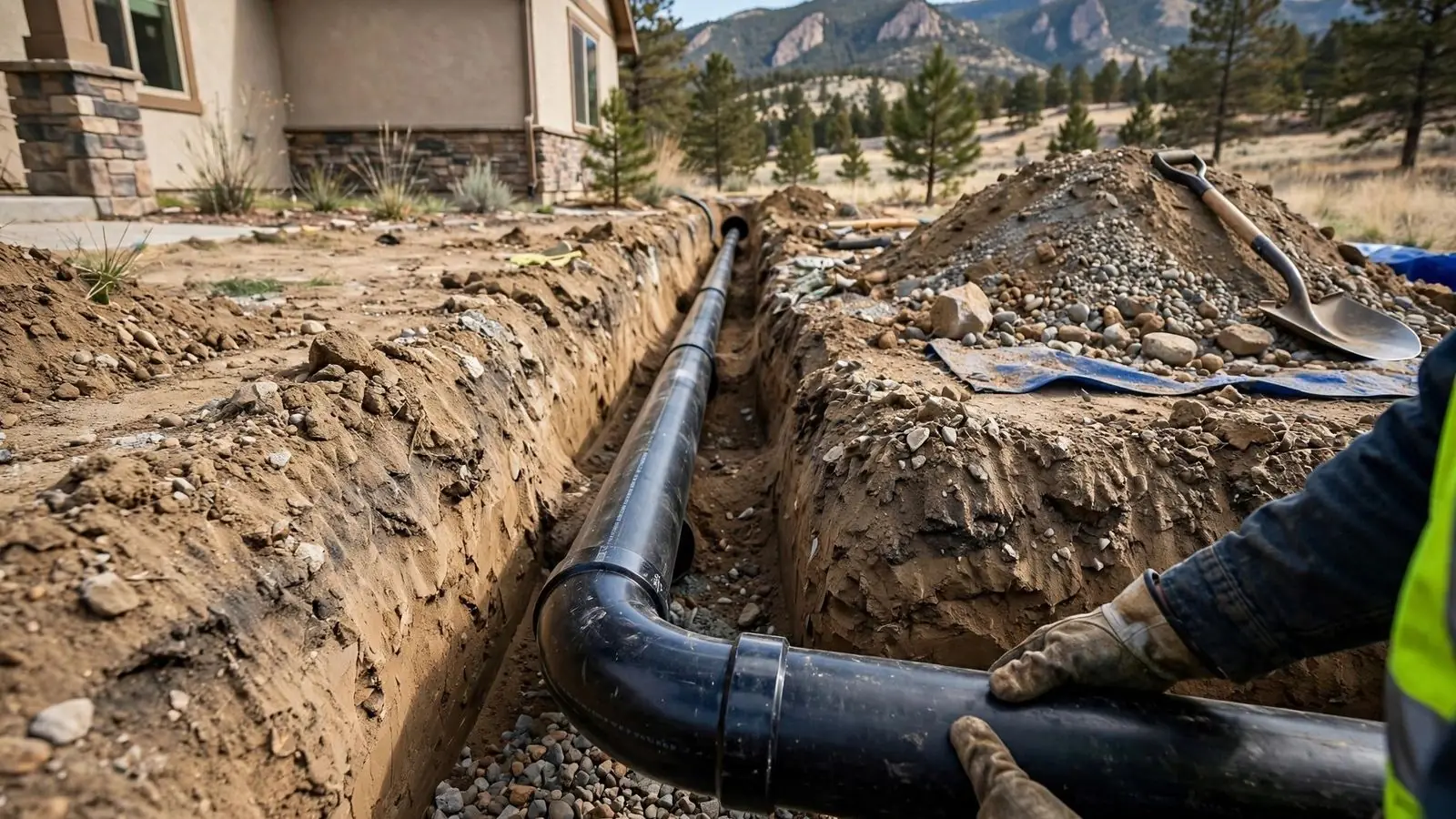
- Replacement. The failed run is excavated or burst and replaced with new pipe. It is the right call for collapsed or heavily sunk pipe.
If a clog is the real issue, drain cleaning or sewer line cleaning comes first, and the camera on our sewer inspection page tells you whether repair is needed at all.
Permits, sewers and septic in the Bessemer area
Bessemer Building Inspections states that plumbing work adding fixtures to a structure on sewer needs a Jefferson County sewer impact permit before the city issues the plumbing permit. Spot repairs and in-place lining of an existing line are different, so ask Building Inspections at (205) 424-4060 what your project needs.
Homes outside the sewer system use onsite septic. The Jefferson County Department of Health lists its Community Environmental Protection Division at (205) 930-1230 for questions on repairs to malfunctioning onsite systems. If your yard has a septic tank rather than a city sewer, tell us at the start of the call.
What changes the price of sewer repair
The code behind the work
Plumbing contractors in Alabama work under minimum standards for installation, service and repair. Under Alabama Administrative Code rule 720-X-1-.02, residential plumbing and gas work follows the 2021 International Residential Code, and commercial plumbing follows the 2021 International Plumbing Code. Local building departments can add their own requirements, so ask Bessemer Building Inspections at (205) 424-4060 what applies to your job.
Source type: State administrative code and city building inspections guidance
Sewer Line Repair questions in Bessemer
Yes. Sewer backups and suspected breaks are dispatched day and night, including weekends and holidays. Stop using all water and keep people out of affected rooms until the plumber arrives.
Repeated main line clogs, gurgling fixtures, wet or sunken yard patches, sewer odor and a backup that returns after cabling all point to damage.
No. Spot repair and lining can avoid long trenches when the pipe is still shaped well enough. Collapsed pipe needs excavation or replacement.
Cutting clears the roots but they return if the joint stays open. Repairing or lining the joint stops them.
Responsibility depends on the property line and local rules. Ask your city or utility before you start work.
A spot repair can take a day. Lining and replacement take longer, and weather and permits affect the schedule.