Signs your pipes may be at the end of their life
- Repeated leaks in different places. One leak is a repair. Three in a year is a pattern.
- Low pressure at every fixture. Corroded galvanized pipe narrows inside.
- Brown or rusty water. Especially at first use in the morning.
- Visible corrosion, flaking or green stains. Pipes at joints and valves show it first.
- Pipe known to be problematic. Polybutylene, which was used in some homes from the late 1970s to the 1990s, is prone to failure.
If a pipe has just burst, see burst pipe repair first. If the leak is hidden, leak detection finds it.
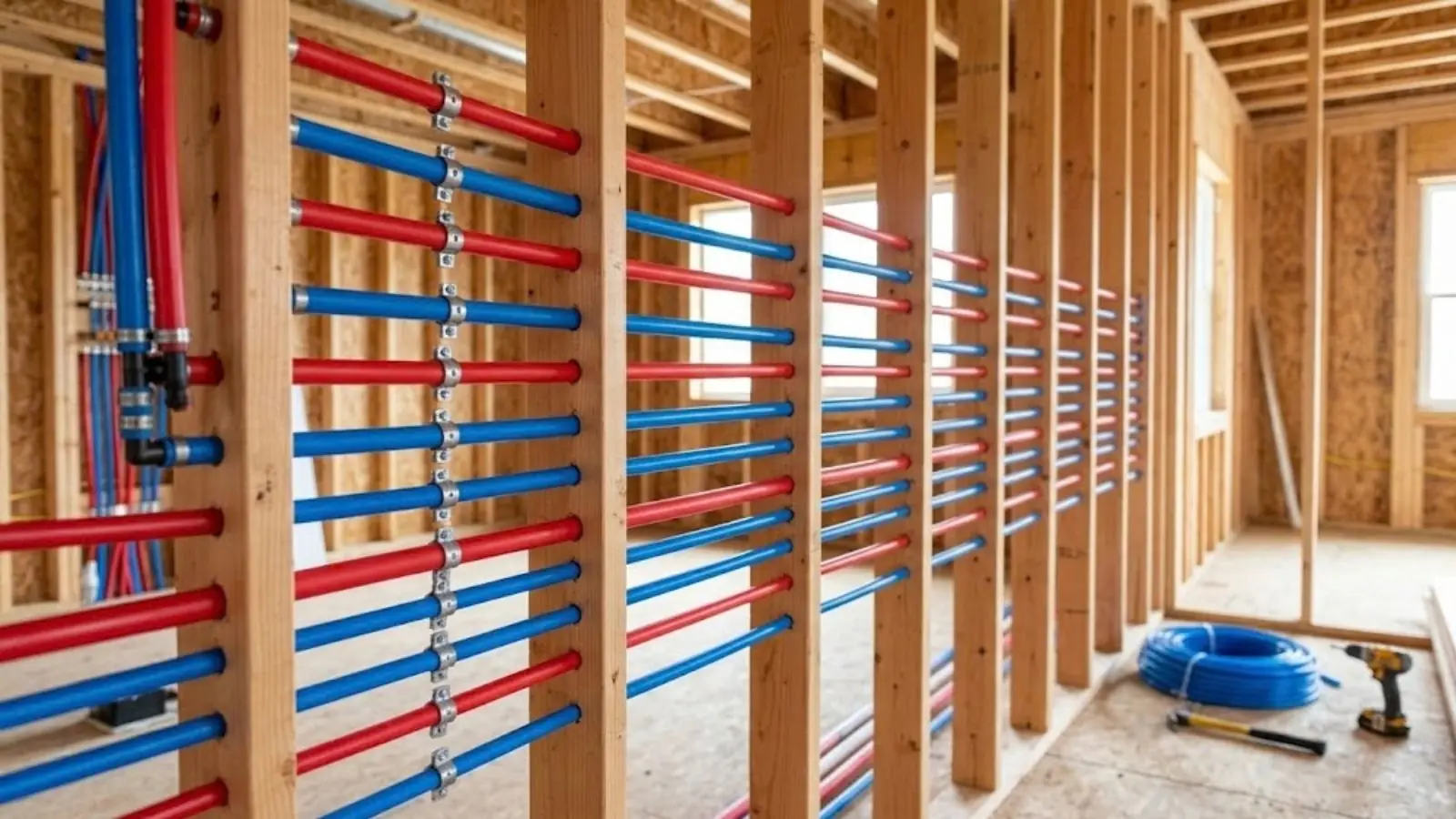
Materials we use
| Material | Strengths | Considerations |
|---|---|---|
| PEX | Flexible, fewer joints, resists freezing damage better than rigid pipe, quick to install | Should not be exposed to sunlight, and fittings must be correct |
| Copper | Long record, strong, handles heat well | Higher material cost, and aggressive water can wear it |
| CPVC | Corrosion resistant, suited to hot and cold lines | More brittle than PEX and needs careful handling |
The right material depends on the house, the budget and local code. We explain the options and recommend one.
What a repipe involves
- Inspect the existing pipes and test the pressure.
- Present a written scope showing whether a full or partial repipe fits.
- Pull the permit when required. Bessemer Building Inspections issues plumbing permits, and (205) 424-4060 is the number to call.
- Run new lines through walls, attic or crawlspace with minimal drywall openings where possible.
- Test the new system, restore the water and arrange patching or finishing.
Repipe the whole house or a section?
A partial repipe makes sense when one branch is failing and the rest is sound, for example the lines to one bathroom. A whole-house repipe is better when leaks are widespread, pressure is poor everywhere or the pipe material has a known failure record. We show the condition of the pipes we can see and explain what is behind the walls that we cannot.
Older homes in Bessemer, built over the decades since the city was incorporated in 1887, often have a mix of original and replacement pipe, so an inspection first avoids paying to replace pipe that is still good.
Living through a repipe
Most homeowners worry about disruption, so here is what to expect. Water is shut off while sections are swapped, and we plan the work so you have water at the end of each day when possible. Access holes in drywall are kept small and placed where they are easiest to patch, often in closets, garages and the backs of cabinets.
Plan for a few days of noise and some dust. Clear the areas where we will work, keep pets away from open walls, and let us know about fragile items. After the new lines pass pressure testing and inspection, patching and painting can be done by us or by your own contractor.
What changes the price of repiping
The code behind the work
Plumbing contractors in Alabama work under minimum standards for installation, service and repair. Under Alabama Administrative Code rule 720-X-1-.02, residential plumbing and gas work follows the 2021 International Residential Code, and commercial plumbing follows the 2021 International Plumbing Code. Local building departments can add their own requirements, so ask Bessemer Building Inspections at (205) 424-4060 what applies to your job.
Source type: State administrative code and city building inspections guidance
Repiping questions in Bessemer
Repeated leaks, falling pressure and discolored water point to a repipe. One isolated leak can usually be repaired.
Many homes take a few days. Larger homes and slab homes take longer.
We try to restore water at the end of each day when possible. We explain the schedule beforehand.
Each has strengths. PEX is flexible and fast to install. Copper has a long record. We recommend based on your house.
Usually yes. Bessemer Building Inspections handles plumbing permits at (205) 424-4060.