Why 120 degrees is a common setting
Many households start at 120 degrees Fahrenheit, and many manufacturers list it as a default or recommended starting point, so check your unit's manual. Hotter water raises the risk of scalding, especially for children and older adults. A lower setting also uses less energy.
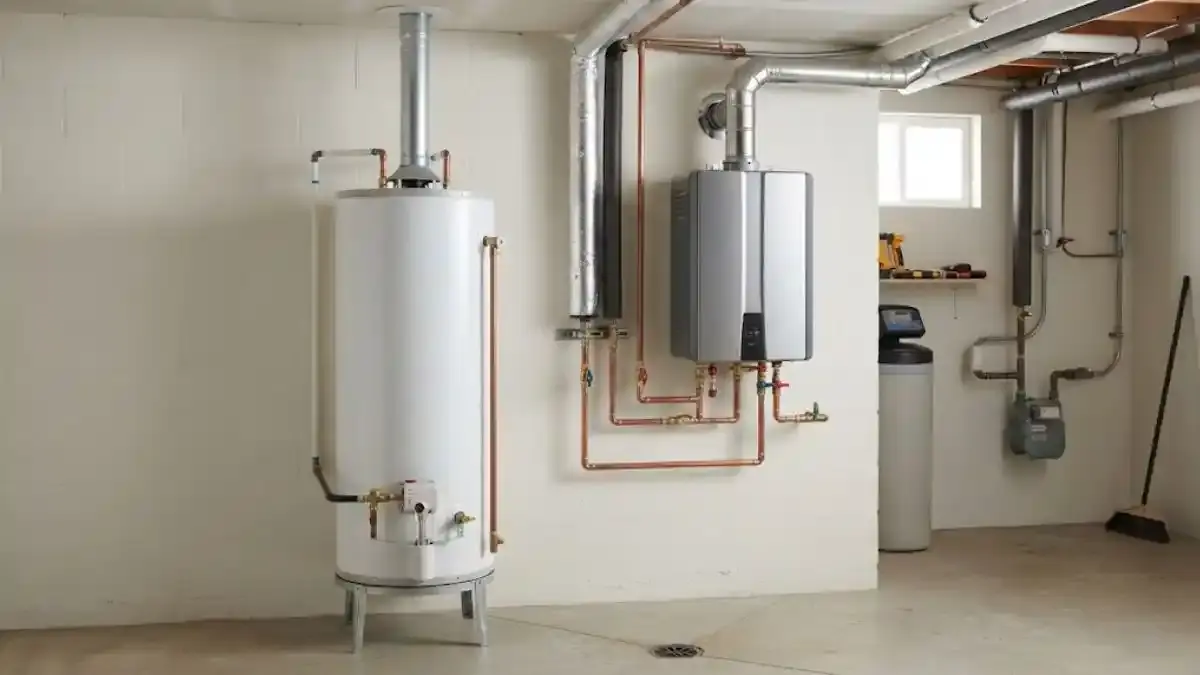
Tankless units differ from tank heaters because they heat water on demand and do not store a large volume. That means the setting is the temperature at the outlet of the unit, not a stored temperature in a tank. Many units let you set the target at the unit or with a remote controller, and the plumber can lock a maximum.
When you might raise it
- A dishwasher without a built-in booster. Some manufacturers specify a higher incoming temperature.
- Long pipe runs. Water cools on the way to a far bathroom, so you may see a slightly lower temperature at the tap.
- A household preference. Raise it in small steps and test at the tap.
If you raise it, consider a mixing valve or anti-scald protection at showers. Always check the manual for the unit's allowed range.
Why the water runs cold, hot or in bursts
| Symptom | Common cause | Fix |
|---|---|---|
| Lukewarm even at the highest setting | Flow is too high for the unit, or scale on the heat exchanger | Reduce flow, descale the unit |
| Hot, then cold, then hot | Low flow cannot trigger the burner or element | Check the flow sensor, add a recirculation or buffer |
| No hot water at a low flow | Minimum flow rate not met | Open the tap further, or have the flow sensor checked |
| Error code on the display | A venting, gas, ignition or sensor problem | Check the manual, then call a plumber |
| Water too hot at the tap | Setting too high or a faulty temperature sensor | Lower the setting, have the sensor tested |
A tankless unit that sputters is often asking for descaling or a sensor check. Our tankless water heater page covers service and installation.
Scale and flushing
Minerals in tap water build up as scale inside the heat exchanger. A little scale reduces heat transfer and flow, and a lot of it can trip error codes. Manufacturers generally recommend a periodic flush, and the right interval depends on your water. If you want to know the mineral content, ask your water utility for its water quality report instead of relying on a general figure.
A flush is done by circulating a descaling solution through the unit. It takes about an hour, and a plumber can show you how to do it or do it for you.
Safety checks: what to do before you adjust the unit
- Venting. Gas units need correct venting. Never block or modify it.
- Carbon monoxide detectors. If your heater burns gas, working detectors are essential.
- Pressure relief. Make sure relief devices are in place and not capped.
- Gas smell. Leave the building and call the gas utility or 911 first.
Testing the temperature at the tap
Unit settings and tap temperatures do not always match. Heat is lost in the pipes, and mixing at a shower valve changes the result. To check, run the hot water at a faucet for a minute and measure with a kitchen or bath thermometer. Compare it with the setting on the unit.
- Choose a tap near the heater and one far from it.
- Run hot water until it stabilizes, then measure it in a cup.
- Note the temperatures and the unit setting.
- If the difference is large, the pipes may need insulation or a recirculation system.
A small drop is normal. A big drop, or a wide swing, is worth a plumber's time.
Households with children or older adults
For these households, a lower setting and anti-scald devices at showers are sensible. Mixing valves and pressure-balancing shower valves help keep the water temperature steady when someone flushes a toilet or opens a tap elsewhere. If your tankless unit has a remote controller, you can lock the maximum temperature so it cannot be raised by accident.
If anyone in the home has a medical need for very hot or very cool water, ask your plumber about options before changing the setting.
Bessemer note: your water report
Mineral content varies across the Bessemer area, and the right descaling interval depends on it. Ask your water utility for the latest water quality report instead of guessing. If you plan a tankless install, Bessemer Building Inspections can tell you what permits apply, at (205) 424-4060.
Source type: Utility customer information and city building inspections guidance
If you live in Hoover or McCalla, your water source and report may differ.
Tankless temperature questions
Many households start at 120 degrees Fahrenheit. Raise it in small steps only if you need to.
Common causes are flow that exceeds the unit's capacity, scale in the heat exchanger or a sensor problem.
It depends on your water and the manufacturer's guidance. A plumber can set a schedule after checking the unit.
Many units allow a maximum setting or a controller lock. Ask your plumber to set it for a home with children.
It is common at very low flow. If it happens at normal flow, have the flow sensor checked.