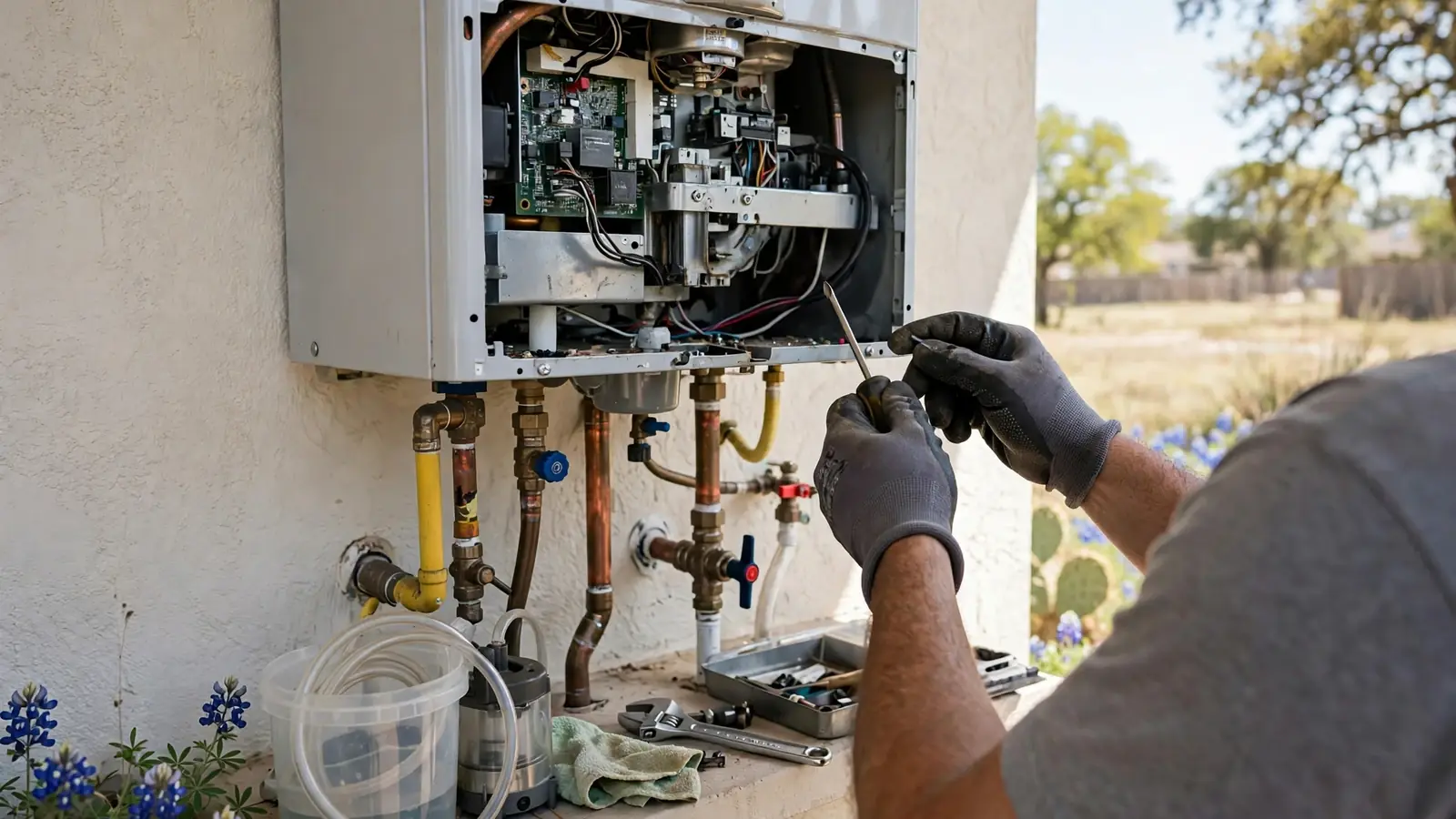
What the flow sensor does
Inside a tankless heater, a small turbine or similar sensor measures the water moving through the unit. When flow passes a minimum threshold, the controller starts the burner or elements. When flow stops, the heater shuts off. If the sensor sticks, reads wrong or fails, the controller gets bad information.
Scale and debris are common causes. Because the sensor sits in the water path, mineral deposits can slow it or jam it.
Signs the flow sensor may be the problem
- Hot water will not start at low flow. A small tap may not trigger the unit.
- Cold sandwich. Hot, then a burst of cold, then hot again.
- Error codes about flow. Your manual lists the codes for your model.
- The unit fires without water moving. A faulty sensor can send a false signal.
- Inconsistent temperature. The unit adjusts based on a bad flow reading.
These symptoms also match scale, a clogged inlet filter or a gas supply issue, so a test is better than a guess.
What a plumber checks first
- Read the error code and check the manual for the model.
- Check the inlet water filter and clean it if debris is present.
- Check supply: gas pressure, power and venting.
- Remove and inspect the flow sensor for scale or damage and test it with a meter.
- Flush the unit if scale is heavy, then retest.
Clean, replace or replace the heater?
| Situation | Likely answer |
|---|---|
| Sensor covered in scale, unit fairly new | Clean or flush, then retest |
| Sensor fails a test, unit in good condition | Replace the sensor |
| Heat exchanger badly scaled or leaking | Repair may not pay, so consider replacing the unit |
| Unit old, parts hard to find | Compare repair with replacement |
| Warranty still active | Check the terms before any work |
We tell you which path makes sense and what each costs. See our tankless water heater page for service and replacement.
Preventing a repeat
- Descale on schedule. It protects the sensor and the heat exchanger.
- Clean the inlet filter. It catches debris before it reaches the sensor.
- Fix leaks and flow problems early. Low flow stresses the unit.
- Keep records. Warranty claims often need proof of maintenance.
What the repair visit looks like
A typical visit starts with a diagnosis. The plumber reads the code, checks the supply and inspects the unit. If the sensor is the likely problem, the plumber shuts off the water and gas or power, removes the sensor and tests it. Cleaning is quick when scale is the only issue. Replacement takes longer because the parts have to match your model.
Ask whether the part is a manufacturer part or an aftermarket one, and what warranty covers the repair. After the work, the plumber should run hot water at low and high flow to confirm the unit behaves normally.
If the visit reveals heavy scale, a flush is usually recommended the same day. It reduces the risk of the sensor sticking again and protects the heat exchanger.
Costs to expect, in terms of what drives them
Reading the signs at the unit
Most tankless heaters show a code and a light pattern. Write down the code before you reset anything. A flow code, an ignition code and an exhaust code each point to a different part of the system, and the manual lists them. If you reset the unit and the problem returns, the code history helps the plumber decide where to start.
Also note when the problem happens. If it fails only at low flow, the sensor is a prime suspect. If it fails at any flow, look at supply and venting. If it happens after a long shower, scale or a heat exchanger issue may be involved. Details like these shorten the visit.
Bessemer note: water quality and permits
How fast scale builds up depends on your water. Ask your water utility for its latest water quality report instead of relying on a general number. If your repair becomes a replacement, ask Bessemer Building Inspections about permits at (205) 424-4060.
Source type: Utility customer information and city building inspections guidance
Customers in Pleasant Grove and Fairfield can book the same repair.
Flow sensor questions
It is possible on some models, but gas and electrical safety matter. A plumber tests the sensor and checks the supply.
A plumber can inspect and test the sensor, and flush the unit to rule out scale.
It depends on the manufacturer and the age of the unit. Check your warranty terms.
Low flow, a flow sensor issue or scale can cause it. A test pinpoints the cause.
If the heat exchanger is damaged or parts are hard to find, replacement may be a better value.