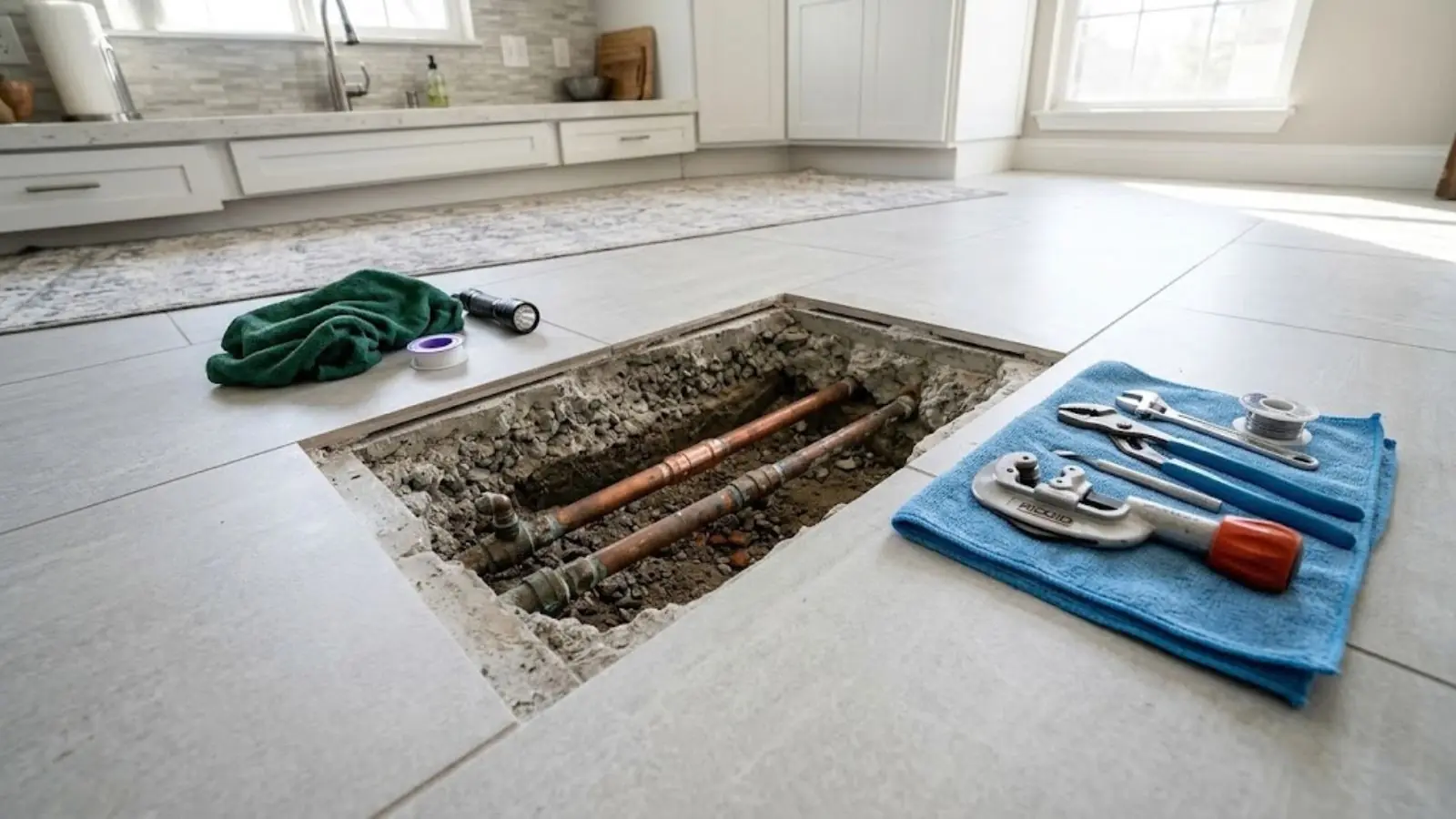
What a real expert brings to the house
- Equipment for more than one test. Pressure testing, acoustic listening gear, a pipe locator and a thermal camera each answer a different question.
- A confirmed location. You should see or hear the evidence, or get it marked on the floor.
- Multiple options. Spot repair, reroute and repipe, each with a clear trade-off.
- A written scope. Not a number on a business card.
- Proof of license and insurance. In Alabama, plumbers are licensed through the Alabama Plumbers and Gas Fitters Examining Board, and you can ask to see a license number.
If a plumber announces a slab leak without testing, treat the claim as a guess.
What to do if water is coming up through the floor now
- Close the main valve and switch off power to the room.
- Stop the water first, then compare plumbers. A real emergency should not wait for three quotes.
- Photograph the damage for your insurer.
Once the water is off, you have time to ask the questions below.
Questions worth asking on the phone
- How will you confirm that the leak is under the slab and not at a fixture?
- Which tools do you bring, and will you mark the location on the floor?
- What are my options besides cutting the slab?
- Who restores flooring and drywall, and is it in your quote?
- Do you pull permits where they are needed?
Red flags in an estimate
| Red flag | Why it matters |
|---|---|
| A price quoted before any testing | The scope is unknown until the leak is located |
| Pressure to sign the same day | A slab leak is not a gas leak. You have time to compare |
| Only one option offered | Spot repair, reroute and repipe each fit different houses |
| No mention of restoration | Concrete patching and floor finishing are extra work |
| Vague or no warranty detail | Ask what is covered and for how long, in writing |
None of these alone proves a plumber is dishonest, but together they suggest a rushed job.
How a slab leak visit should run
A good visit has a clear sequence. The plumber confirms the leak with a meter test and a pressure test, narrows it with listening gear and a locator, then marks the spot and explains the repair options. Only then does the price conversation start.
If the plumber opens the floor first and explains later, you lose the chance to choose a reroute. Our slab leak repair page walks through how we handle each step, and leak detection explains the tools.
Insurance, documentation and your own records
Photograph the damage before anyone touches it. Ask the plumber for a written report that names the leak location, the repair and the cause if known. Insurers usually want that report, plus receipts for any drying or restoration. Policies differ on whether the pipe repair is covered, so ask your agent what the policy says about access and water damage.
Keep the report with your house records. It helps when you sell, and it helps if a second leak appears in the same line later.
What happens after the repair is done
Once the leak is repaired and tested, the plumber should pressurize the line again and confirm that the meter holds still. Ask to see the result. Then the area needs to dry. Slab leaks can soak insulation, baseboards and flooring, and a damp subfloor can grow mold if it stays wet.
Plan for drying equipment, patching the concrete and replacing the flooring or baseboard that was removed. Some of this is covered in the plumber's quote and some is a separate trade, so ask who is responsible for what. Keep every receipt together with the plumber's report.
A few weeks later, check the water meter again with everything off. If the repair was complete, it should be still. If you see movement, call the plumber back with the date and your reading. A good company wants to know and will check the line again.
When a reroute is the smarter choice
If the same line has leaked more than once, or the pipe is old and corroded, spot repairs can turn into a series of small jobs. A reroute abandons the buried run and installs new pipe above the slab, often through the attic or walls. It costs more at first, but it removes the buried line from the equation.
Ask the plumber to explain why they recommend the option they chose and what the other options would cost and involve. An expert will give you a straight comparison, not just a preference.
Bessemer note: licensing and permits
The Alabama Plumbers and Gas Fitters Examining Board licenses plumbers in the state, and you can ask a contractor for a license number before work starts. Bessemer Building Inspections handles local plumbing permits at (205) 424-4060.
Source type: State licensing board and city building inspections
If you live in Hoover or Hueytown, check with that city's building department, since permit rules differ by jurisdiction.
Hiring a slab leak plumber: your questions
For a large repair, yes. Compare how each plumber found the leak and what options they offer, not only the price.
Ask for the meter test result, the pressure test and the location marked on the floor.
Ask for the terms in writing, including what is covered and for how long.
Often a separate trade. Ask whether it is included in the quote or handled by you.
Yes. Ask for the license number and check it with the state licensing board.