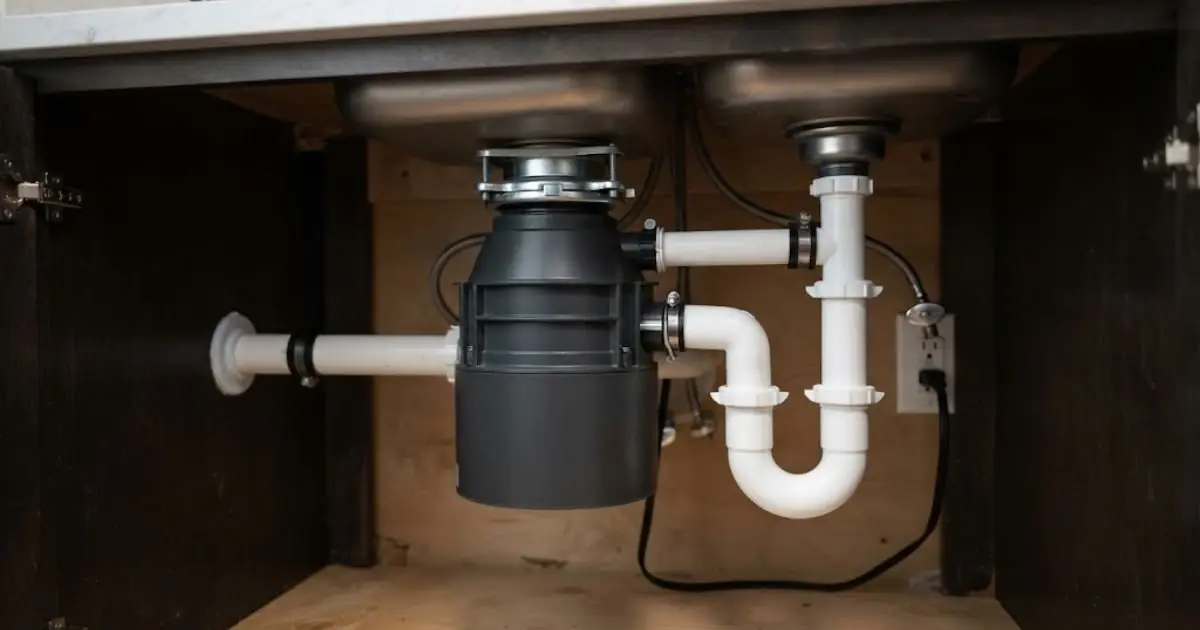
Disposal jammed or humming
- Turn the switch off, and unplug the unit or switch off its breaker. Never put your hand in a disposal.
- Look underneath for the hex socket at the center bottom. Insert a hex key and work it back and forth to free the blades.
- Press the red reset button on the bottom of the unit after the motor cools.
- Restore power and run cold water while you test it. If it still hums or trips, call a plumber.
A disposal that leaks from the bottom or the side usually has a failed seal and needs replacing, not repair.
What goes wrong and what we do
| Symptom | Likely cause | Typical fix |
|---|---|---|
| Hums but does not spin | Jam from a bone, peel or utensil | Free the jam with a hex key and clear the debris |
| Nothing happens | Tripped reset, breaker or failed switch | Reset, test power and replace the switch if needed |
| Leaks at the top flange | Worn plumber's putty or gasket | Reseat the flange |
| Leaks from the body | Cracked housing or failed internal seal | Replace the disposal |
| Slow drain or standing water | Clog in the trap or drain line, not the disposal | Cable the line, see our drain cleaning |
| Foul smell | Food residue or a dry trap | Clean, flush and check the trap |
What not to put down a disposal
- Grease and oil. They coat the drain and cause stubborn clogs downstream.
- Fibrous food. Celery, corn husks and artichokes wrap around the blades.
- Starchy food in volume. Rice, pasta and potato peel can form a paste in the line.
- Bones, pits and shells. They can jam or damage the unit.
- Non-food items. Utensils and bottle caps end up in the blades more often than you would think.
Run cold water before, during and after use so debris is carried through the drain line.
Repair or replace
A disposal that is more than about ten years old, leaks from the body or has a seized motor usually calls for replacement. Replacing it takes less than a couple of hours when the sink plumbing is in good shape. We can match the horsepower to how you cook and check the sink drain while we are there.
Disposal clogs are often drain clogs in disguise, and the fix is the line, not the unit. Our plumbers check both so you do not pay twice.
Keeping a disposal healthy
A little routine care extends the life of the unit and keeps the drain clear. Run cold water for several seconds before and after each use. Grind small amounts at a time instead of a full sink of scraps. Never pour grease into the sink, and avoid fibrous peels and large bones.
If the unit smells, flush it with cold water and a handful of ice, then rinse well. A persistent smell after cleaning often means residue is sitting in the trap or the drain line below, and that is a drain issue to have cleared, not a disposal replacement.
What changes the price of disposal repair
Garbage Disposal Repair questions in Bessemer
The blades are jammed. Turn off the power, free the blades with a hex key from underneath and press the reset button.
A leak at the sink flange can be fixed. A leak from the body usually means the disposal must be replaced.
A clog in the drain below the disposal is the usual cause. The line, not the unit, needs clearing.
Many last about ten years, depending on use and what goes in them.
If water backs up onto the floor, shut off the sink supply and call. A simple jam can wait for a scheduled visit.