What a bio cleaner actually does
Enzyme and bacterial drain products digest organic matter such as grease, soap film and food residue. They do not dissolve hair as well, and they do not remove hard objects, mineral scale or tree roots. They work over hours or days, so they suit a drain that is a little slow, not one that is fully blocked.
Because they do not rely on strong acids or caustic soda, they are gentler on pipes and seals and safer to have around. That matters for older homes with aging pipes.
Where they help and where they do not
| Situation | Bio cleaner? | Better option |
|---|---|---|
| A slow kitchen drain from grease buildup | Can help with regular use | Cable or jetting for heavy buildup |
| A fully blocked sink or tub | Too slow | Hand auger or machine |
| A hair clog in a shower | Limited | Hair catcher and a hand auger |
| A main line backup | No | Sewer line cleaning |
| Odor from a drain | Often helps | Check the trap and the vent if it persists |
| Roots or a broken pipe | No | Camera inspection and repair |
If you are not sure what is causing the clog, a plumber can look instead of guessing.
How to use one safely
- Read the label. Products differ in how long they need to sit.
- Use it at night, when the drain will not be used for several hours.
- Pour the recommended amount, then let it work without flushing it right away.
- Flush with warm water in the morning, not boiling water, which can harm PVC and kill the bacteria.
- Repeat as the label advises. One dose rarely fixes a serious clog.
Never mix a bio cleaner with a chemical cleaner. The chemicals can kill the bacteria and make the mix unsafe.
What not to do: harsh chemicals and mixed cleaners
Caustic and acid cleaners can soften old pipes, damage seals and leave a hazard in standing water. If the cleaner does not clear the clog, the next person to work on it, you or a plumber, inherits a pipe full of harsh chemicals. Many plumbers will not use a cable machine in a line full of drain cleaner.
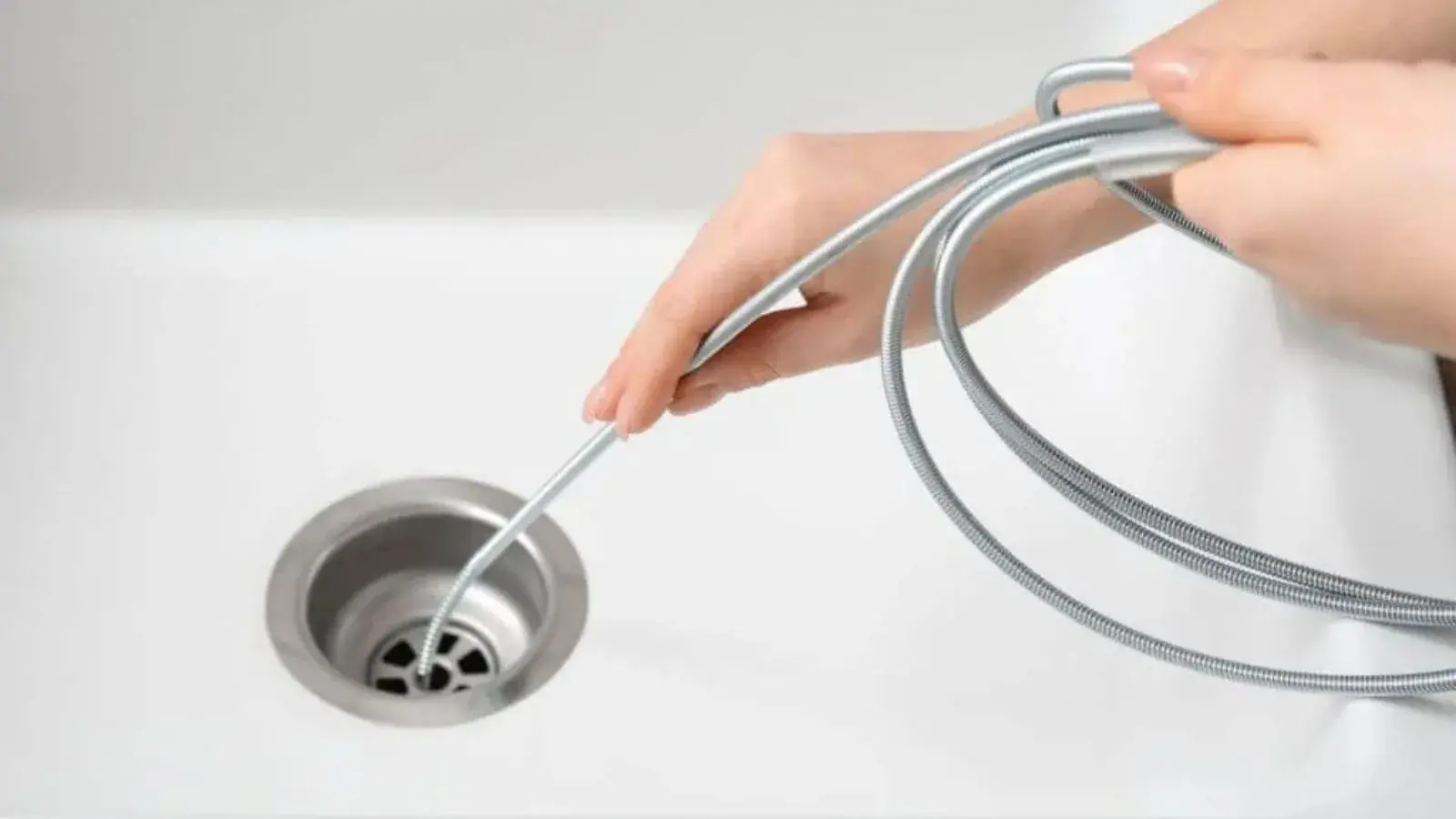
A cable or a jetter clears the blockage mechanically without chemicals. Our drain cleaning page explains how it works.
Prevention beats rescue
- Keep grease out of the sink. Wipe pans with a paper towel and throw it away.
- Use a strainer. Catch food and hair before they enter the drain.
- Flush with hot water after washing greasy dishes. It helps move residue along.
- Use a bio cleaner monthly if you like. It can help control buildup between cleanings.
- Schedule a camera or jetting visit if clogs recur. Repeat clogs signal a deeper cause.
Kitchen, bathroom and laundry drains behave differently
A kitchen drain collects grease, starch and soap. That is the best case for a bio product, because the buildup is organic and a regular dose keeps it from thickening. A bathroom drain collects hair and soap scum. The bacteria do little for hair, so a hair catcher and a hand tool matter more.
A laundry standpipe collects lint and detergent residue, which is mostly not organic, so a bio product helps less.
If you use a bio cleaner on a kitchen drain, pair it with good habits. Scrape plates, wipe greasy pans and avoid pouring oil down the sink. The product supports those habits, it does not replace them. If the drain is still slow after two or three weeks of regular use, the cause is probably something it cannot reach, and a plumber should look.
Signs it is time to stop experimenting
- More than one fixture is slow. The problem is in a shared line, not a trap.
- Gurgling or bubbling when you run water. Air is being pushed through a restricted line.
- Standing water that does not move. A full blockage will not respond to a slow treatment.
- The same clog returns every few weeks. There is a cause a camera can show.
Bessemer note: septic systems and cleaners
If your home uses a septic tank, as some homes around McCalla and the outskirts of Bessemer do, avoid harsh chemicals that can harm the tank. The Jefferson County Department of Health lists its onsite sewage program at (205) 930-1230 for questions about septic systems. Some septic-safe bio products exist, so check the label and ask.
Source type: County health department program information
Homeowners in McCalla and Pleasant Grove should tell us whether they have sewer or septic when they call.
Bio drain cleaner questions
They are generally gentler than caustic or acid cleaners, because they use enzymes or bacteria instead of harsh chemicals.
Hours to days, and repeated doses may be needed. They are not an instant fix.
Not right away. The chemicals can kill the bacteria, so rinse well and wait before using a bio product.
No. A main line blockage needs a machine from the cleanout.
Check the label. Many septic-safe products exist, but harsh chemicals should be avoided.